




Choosing the perfect monitor size is a crucial step in building an effective workspace or gaming setup. The right choice is a balance between size, resolution, pixel density (PPI), and your primary use case. This guide breaks down the optimal monitor dimensions for productivity, competitive gaming, and high-fidelity 4K experiences in 2025.
Before selecting a size, you must understand the relationship between the three core monitor specifications.
Size (Inches): The diagonal measurement of the screen.
Resolution (Pixels): The total number of pixels horizontally and vertically (e.g., 1920x1080, 2560x1440, 3840x2160).
Pixel Density (PPI - Pixels Per Inch): This is the single most important factor for clarity. It measures how tightly the pixels are packed.
| Resolution Name | Standard Designation | Optimal Size Range (PPI Sweet Spot) |
| Full HD | 1080p (1920 x 1080) | 22–24 inches (Avoid 27" at 1080p) |
| Quad HD | 1440p (2560 x 1440) | 27–32 inches |
| Ultra HD | 4K (3840 x 2160) | 27–43 inches (27" or 32" recommended) |
Pro Tip: Target a PPI of 100-120
For crisp text and images without needing scaling, a PPI between 100 and 120 is considered the visual sweet spot. A 27-inch monitor at 1440p resolution provides ~108 PPI, which is ideal for most users.
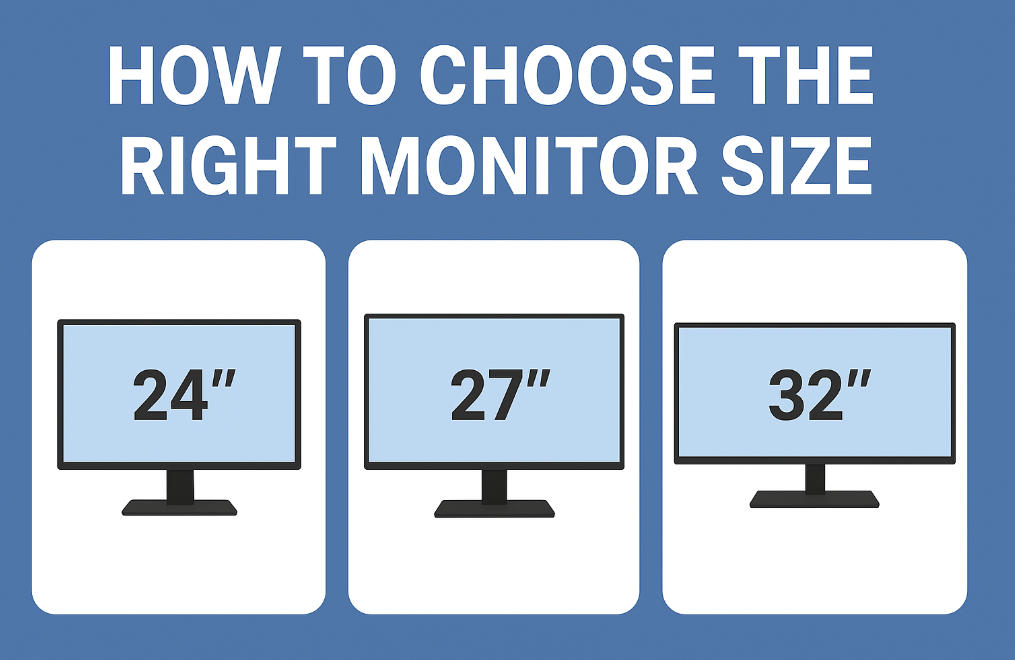
Productivity setups prioritize screen real estate and comfort. The goal is to maximize the number of open windows you can view without excessive head movement.
Ideal For: Budget setups, small desks, dual-monitor configurations, and basic data entry.
Why It Works: At 1080p, a 24-inch screen offers an excellent 92 PPI. It's affordable, easy to drive, and perfect for side-by-side applications in a multi-monitor array.
Ideal For: Software developers, writers, graphic designers, and general office use.
Why It Works: The 27-inch, 1440p combination provides optimal pixel density (~108 PPI), offering 77% more screen space than 1080p without forcing you to use aggressive scaling. This is the top recommendation for most professional users.
Ideal For: Financial analysts, video editors, and power multitaskers replacing a dual-monitor setup.
Why It Works: A 34-inch 21:9 Ultrawide monitor (usually 3440x1440 resolution) is the equivalent of a 27-inch monitor with an extra screen bolted on the side. This eliminates the need for bezels and is fantastic for timeline-based work.
Gaming monitor selection depends heavily on your PC's power and your game genre preference (Competitive vs. Immersion).
Ideal For: Esports, FPS, and games where maximum frame rates (144Hz+) are critical.
Why It Works: Smaller monitors ensure the entire display is in your field of vision, allowing you to track opponents quickly without moving your eyes too far. 1080p is still dominant here because it's easier for GPUs to render extremely high frame rates.
Ideal For: The average gamer who wants a balance between visual fidelity and high refresh rates.
Why It Works: 1440p is now the standard resolution for mainstream gaming. A 27-inch size provides immersion without taxing the GPU as hard as 4K.
Ideal For: Single-player, open-world games, flight simulators, and next-gen console gaming.
Why It Works: This size and resolution combination delivers stunning visual detail. Ensure your PC can maintain at least 60 frames per second at 4K resolution, as performance dips are more noticeable at this high pixel count.
When adopting 4K (3840 x 2160), size is critical for making those extra pixels visible and useful.
27 inches is the absolute minimum: Below 27 inches, the pixels are so small that the operating system must use significant scaling (150% or more), effectively making the screen behave like a 1440p display in terms of usable space, negating the benefit of 4K.
32 inches is the ideal: At 32 inches, 4K provides around 138 PPI. This high density allows for a sharper image, and you can comfortably use a lighter scaling (125% or 100% native) to enjoy the extra desktop space.
43 inches for desktop TV replacement: A large 4K display can serve as a massive central monitor for media and productivity, though head movement becomes a factor.
| Use Case | Best Size (Inches) | Best Resolution | Key Feature |
| General Office Work | 27" | 1440p (QHD) | High PPI (~108) & screen real estate. |
| Competitive Gaming | 24"–25" | 1080p (FHD) | High Refresh Rate (144Hz+) & low latency. |
| AAA Immersion Gaming | 32" | 4K (UHD) | Cinematic detail and large viewing area. |
| Creative/Multitasking | 34"–38" | 3440x1440 (Ultrawide) | Replaces dual monitors, ideal for timelines. |



 IPv6
IPv6